
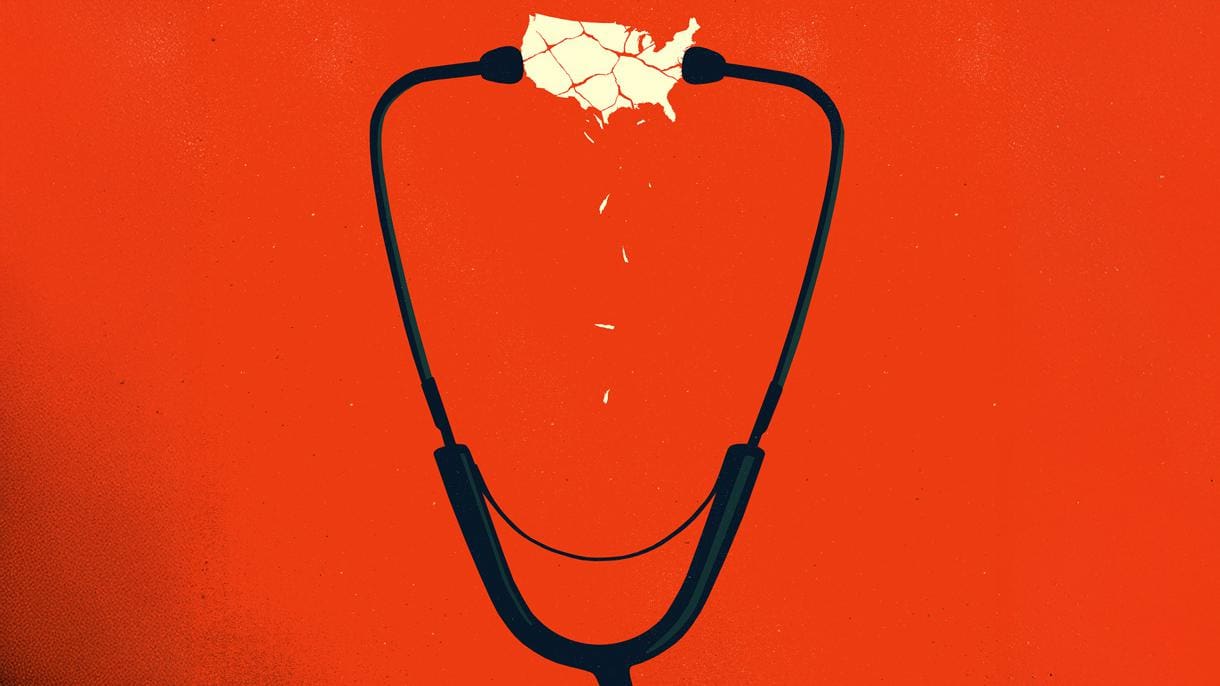
At his confirmation hearing in January of 2025, Secretary of Veterans Affairs Doug Collins, a former congressman from Georgia, assured the Senate Veterans’ Affairs Committee of his commitment to provide specialized, high-quality medical care for the roughly nine million veterans enrolled in the nation’s largest and only truly integrated public health care system, the Veterans Health Administration (VHA).
But Collins, a chaplain in the Air Force Reserve, also explained that his mandate from President Trump is to make it “easier for veterans to get their health care when and where it’s most convenient for them,” by giving them greater choice between in-house and outsourced care. To do this, he planned to lean on the network of 1.7 million private-sector providers who are part of the Veterans Community Care Program (VCCP), created by the VA MISSION Act of 2018. Annual reimbursement of these non-VHA doctors, therapists, hospitals, and clinics now costs the federal government more than $30 billion per year, nearly one-third of the VA’s entire direct care budget.
Collins’s proposed budget for fiscal year 2026 calls for a 50 percent increase in discretionary VHA spending on private care and a 17 percent reduction in discretionary direct care funding. (The overall proposed budget for VA medical services increases, but only because of a large boost in the mandatory Toxic Exposures Fund, which provides health services for veterans exposed to burn pits and environmental exposures. All other diagnoses not in the TEF authorizing legislation would fall under the reduced discretionary budget, and even adding mandatory spending, private care is poised to increase at nearly twice the rate of VA direct care.) And Collins has taken other steps consistent with the goal of downsizing direct service provision and boosting the VHA’s reliance on outside vendors.
Republicans in Congress routinely assert that veterans can easily find better and faster treatment outside the VHA. That’s because they assume that we have enough hospitals, primary care providers, specialty physicians, and mental health therapists to care for the country’s current patient load of 330 million nonveteran Americans, let alone nine million more veterans.
To test the accuracy of these claims, the Veterans Healthcare Policy Institute (VHPI) partnered with the Prospect on a survey of the U.S. health care landscape in all 50 states. State by state, we looked at the data on the current available supply of primary care providers, mental health professionals, and hospitals, particularly in the rural (and remote rural) areas where about one-quarter of all veterans, or about 4.7 million, reside, with 2.8 million of them enrolled in the VHA.
This analysis reveals a system that cannot provide even basic medical and mental health services to nonveteran patients. Hundreds of hospitals in America’s rural counties and underserved areas have curtailed critical services or closed entirely. And thousands of counties across America are experiencing significant health provider shortages, according to federal data.
The dramatic shortfall in capacity in our nation’s health system will get even worse with the passage of President Trump’s One Big Beautiful Bill Act. On top of unilaterally imposed cuts that are already crippling the nation’s academic medical centers, the law, signed on July 4, will impose over a trillion dollars of cuts to Medicaid and the Affordable Care Act. Around 17 million people are expected to lose their health insurance due to Trump’s policies, guaranteeing increased uncompensated care at emergency rooms. States will also have less money to fund their Medicaid programs. All of this will lead to additional hospital closures and more shortages of health care personnel.
Yet, at precisely this moment, President Trump, VA Secretary Collins, and Republicans in Congress also want to send more veteran patients into an already troubled private-sector system, while depleting that system of the resources necessary to absorb this extra load. The idea that this will work well is shaped more by ideology than reality.
One longtime VA expert observed: “Imagining that you can add more complex VA patients into a private-sector system that will be reeling from, and contracting because of, funding cuts is nothing short of delusional.”
During his first six months on the job, Collins ordered the illegal mass firing of 2,400 VA probationary employees. He developed a plan to cut 15 percent of his agency’s workforce by late 2025, and canceled hundreds of contracts with researchers whose work also supports patient care. He ended remote work arrangements and ordered mental health care providers to report back to facilities not properly set up for telehealth work. This chaotic restructuring, driven by the Trump-created Department of Government Efficiency, has led to widespread workplace disruption, rapidly cratering morale, and uncertainty for thousands of career employees at the VA.
If VA services or facilities are cut around the country, shortages of primary care providers, medical specialists, and mental health professionals will increase. That’s because the VA plays a pivotal but largely unrecognized role in our system of training health care professionals, through educational partnerships with 90 percent of U.S. medical schools. Congress allocates funding so that the VA can train about 75,000 medical students and residents at the VA every year. The Association of American Medical Colleges has called the VA an “irreplaceable component of the U.S. medical education and research enterprise.”
The VA also trains 60 other categories of health care professionals, including nurses, and optometrists, and pharmacists, and psychologists. The VA, which is the single largest employer of psychologists in the country, trains 1 in 5 of the nations’ future Ph.D.s in psychology. The continued existence of these professional training programs depends, however, on the VA having enough patients to provide trainees with enough of a diversity of clinical experiences, as well as enough expert staff to educate and monitor trainees.
If too many patients are sent out of the system or there aren’t enough staff to teach trainees, training programs won’t be accredited and will end. Former VA undersecretary for health Kenneth W. Kizer believes this could “have widespread effects on the provision of care in the United States, and could exacerbate health care professional shortages.”
But when veterans groups, VA patients and their families, or caregivers protested these changes, Republicans in Congress dismissed their concerns. According to House Veterans’ Affairs Committee chairman Mike Bost (R-IL), the “VA bureaucracy” itself “poses a greater danger to the health of our veterans than the illnesses they seek treatment for.”
Bost and other Republicans in Congress have introduced multiple bills that would greatly expand the outsourcing authorized by the MISSION Act seven years ago. For example, Sens. Marsha Blackburn (R-TN), Tim Sheehy (R-MT), Roger Wicker (R-MS), and Tommy Tuberville (R-AL) have sponsored the Veterans Health Care Freedom Act, to “provide veterans with greater autonomy to access the care they need.” This legislation goes beyond recent patient referral rule changes made by Collins. It would allow veterans to make appointments with private-sector providers in the VCCP without any prior consultation with or authorization from their in-house provider.
Other red-state Republicans, who also represent many veterans in rural areas, have jumped on the bandwagon. Earlier this year, Sen. Kevin Cramer (R-ND) joined Sheehy as a co-sponsor of the Critical Access for Veterans Care Act. Their bill would steer more veterans toward “health care services at their local rural hospital or clinic under the VCCP.”
That movement of patients into private-sector care, along with the significant funding resources being taken out of the system by Medicaid and Affordable Care Act cuts, will push a system on the brink of collapse at both ends.
WHAT CAN I DO ABOUT THIS ISSUE?
- CALL YOUR REPRESENTATIVES and demand they take action.
- USE A TOOL LIKE RESISTBOT OR FIVE CALLS to contact your elected representatives.
- SHARE THIS STORY TO RAISE AWARENESS using the buttons at the bottom of this post, If you can’t see the buttons, turn off your ad-blocker for this site.
- TALK TO FRIENDS AND FAMILY about this issue.
- MAKE A FLYER about this issue to hand out at your next resistance gathering.
- ORGANIZE A MEETUP about this issue at your library, favorite coffee shop, or other venue.
- FIND A LOCAL ORGANIZATION already working on this issue and join forces with them.